
- TOP >
- Museum >
- Exhibition >
- Scary Books : Villains, Tortures, Monsters, and … ?
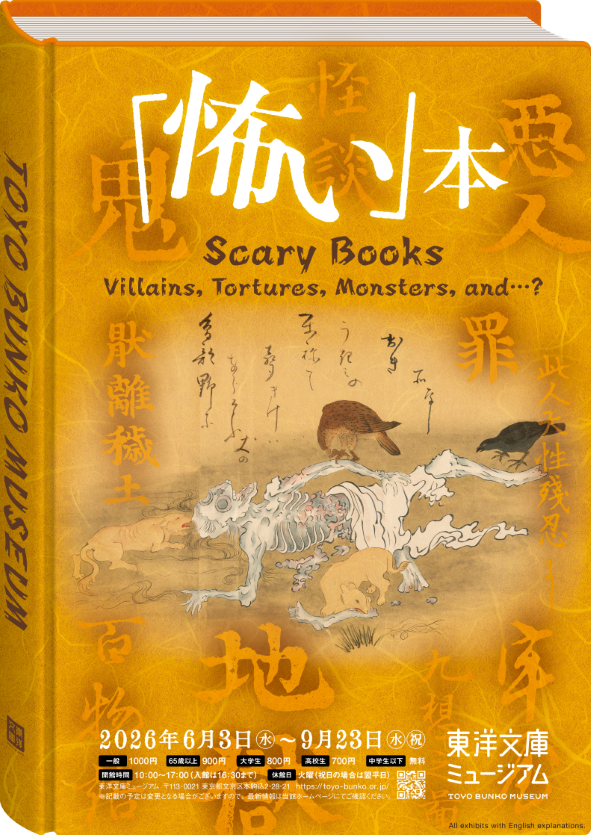
Scary Books - Villains, Tortures, Monsters, and … ?
2026.6.3 Wed -
2026.9.23 Wed
The original titles and invoice numbers of the exhibited materials can be found here.
After the exhibition, these materials can be viewed in the reading room (some may not be available).
Please click here for detailed information on how to browse.
Exhibition Structure and Highlights
The Afterlife
The idea of hell as a world where those who were evil in life suffer after death remains deeply rooted even today. In Japan, such images were shaped primarily through the influence of Buddhism.
According to The Essentials of Birth in the Pure Land (985), the dead are reborn into one of six realms—hell, hungry ghosts, animals, violent demigods, humans, or heavenly beings—depending on their actions while alive. Images of hell depicted in paintings stirred fear in those who saw them. The human realm addresses the impurity of both the living and the dead. In particular, ideas surrounding the impurity of death were incorporated into Buddhist practices, with monks seeking to free themselves from attachment by observing the decay of a human corpse.
This section introduces the terrifying world of the afterlife, which served as a caution against doing evil deeds in this life.
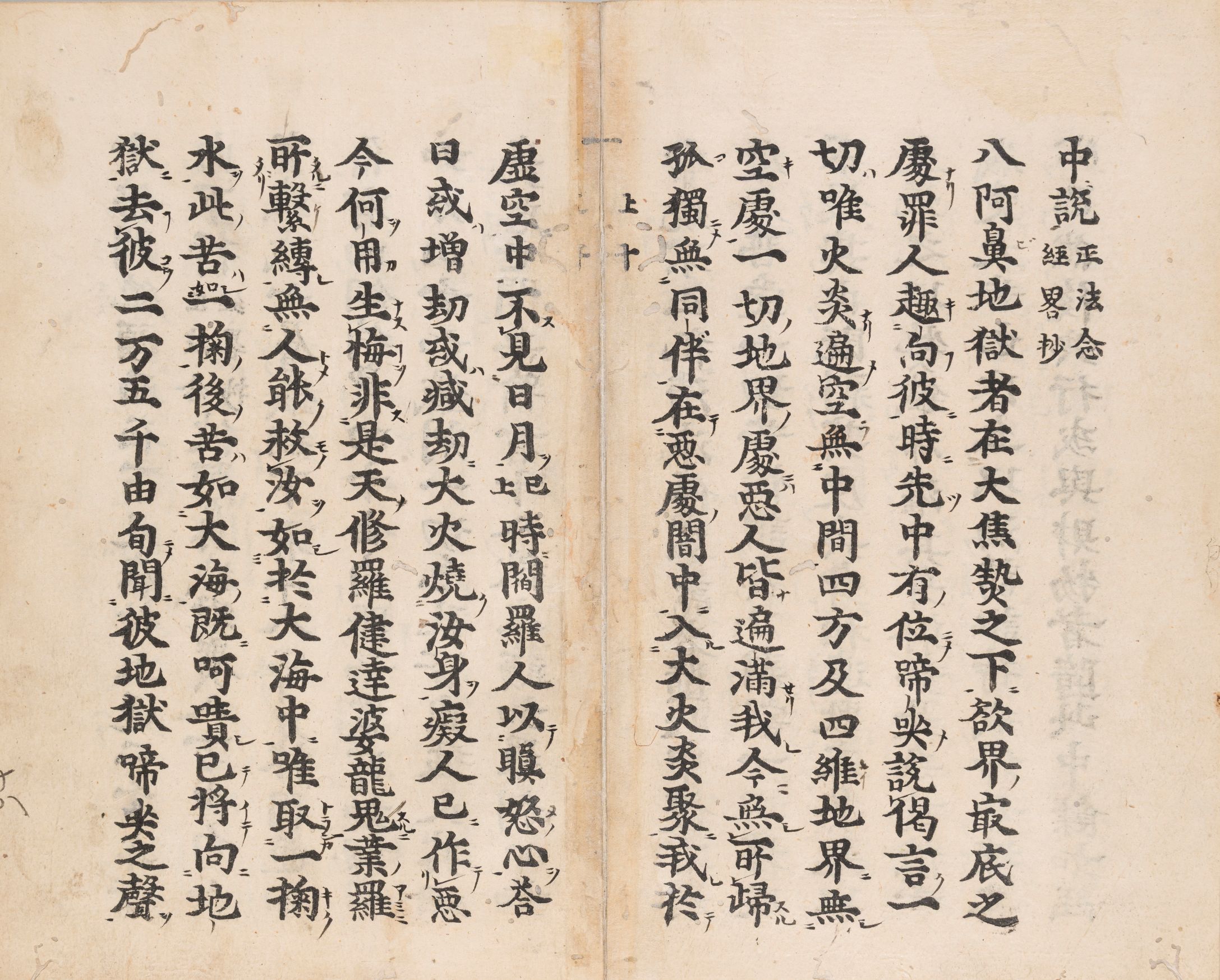
The Essentials of Birth in the Pure Land,
Genshin, completed in 985, 13th - 14th century edition
Genshin (942–1017), a Buddhist monk of a temple on Mt. Hiei, compiled this work from sutras and Buddhist treatises concerning rebirth in the Pure Land. The book also describes hell in detail as a realm in which various punishments are inflicted upon the dead, helping to spread ideas about sin and punishment in Buddhism. At the same time, its teaching that sincere faith in the Buddha and the chanting of the nenbutsu lead to rebirth in the Pure Land had a profound influence on Japanese Buddhist thought.
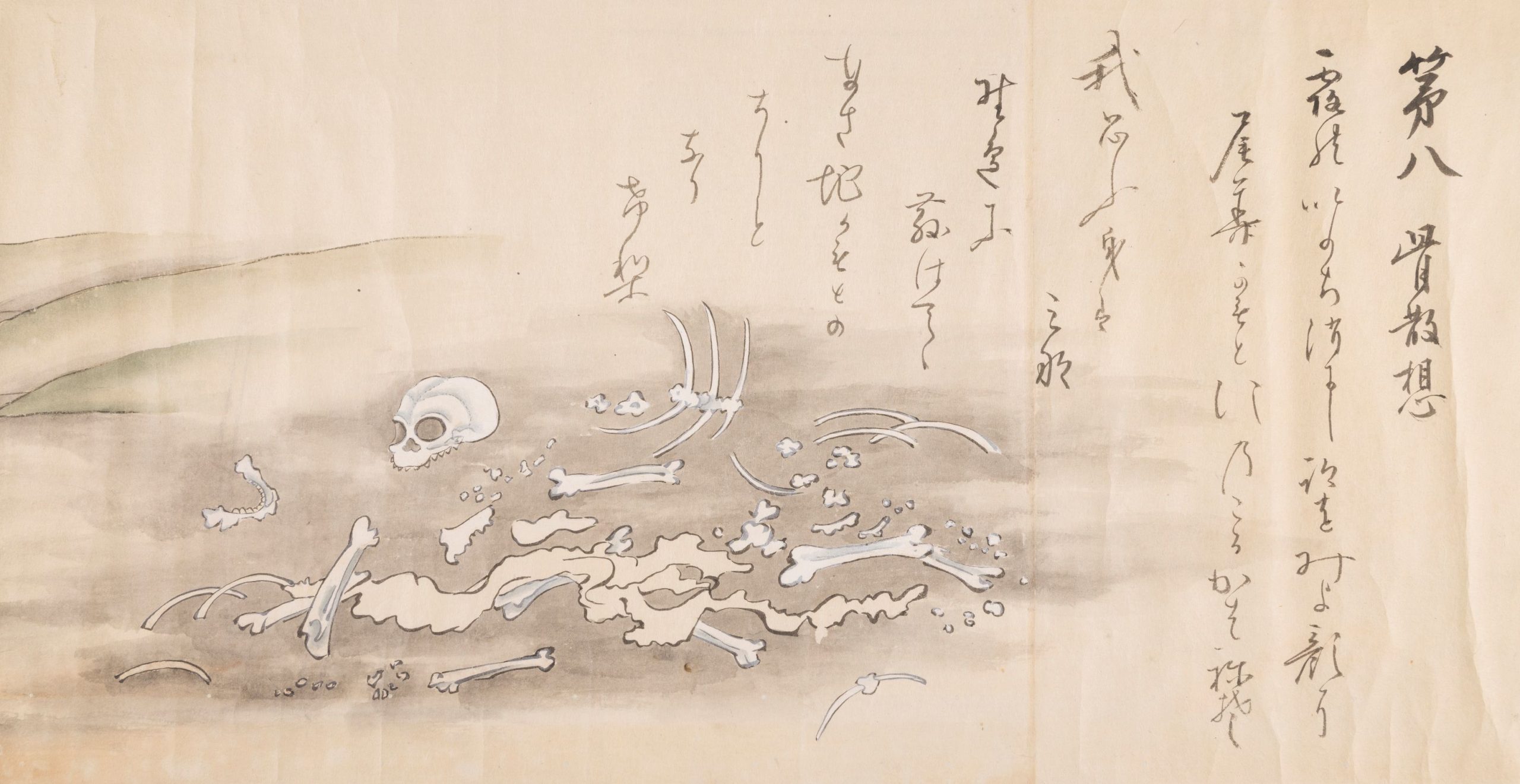
Picture Scroll of the Nine Stages of Bodily Decay,
possibly from the Kamakura period; transcription date unknown
Exposure burial is a funerary practice in which a body is left outdoors to decay naturally. This Buddhist picture scroll depicts the process of bodily decomposition in nine stages. It is believed to have been used in the training of Buddhist monks to help them renounce worldly desire and lust. The section on display portrays the stage in which wild animals, drawn by the smell of the decaying corpse, gather to devour the body.
The Supernatural in Japan
In ancient Japan, people believed that goryō—terrifying, invisible, non-human entities—were responsible for natural disasters, disease, and other mysterious phenomena affecting everyday life. When calamities struck, rituals and incantations were performed to pacify these vengeful spirits and ward off further misfortune.
In the early modern period, however, these non-human beings gradually came to be represented as visible and even humorous figures. Intellectuals sought to explain such entities, and by the eighteenth century, doubts about their existence had begun to spread. As they became increasingly visualized and codified as yōkai, they also appeared in kusazōshi (illustrated popular fiction), kabuki, and toys as sources of popular entertainment.
In this way, non-human beings gradually disappeared from the forefront of everyday life. Even so, the beings later known as yokai continue to fascinate people today. This section traces changing perspectives on whether such beings should be regarded as frightening or not.
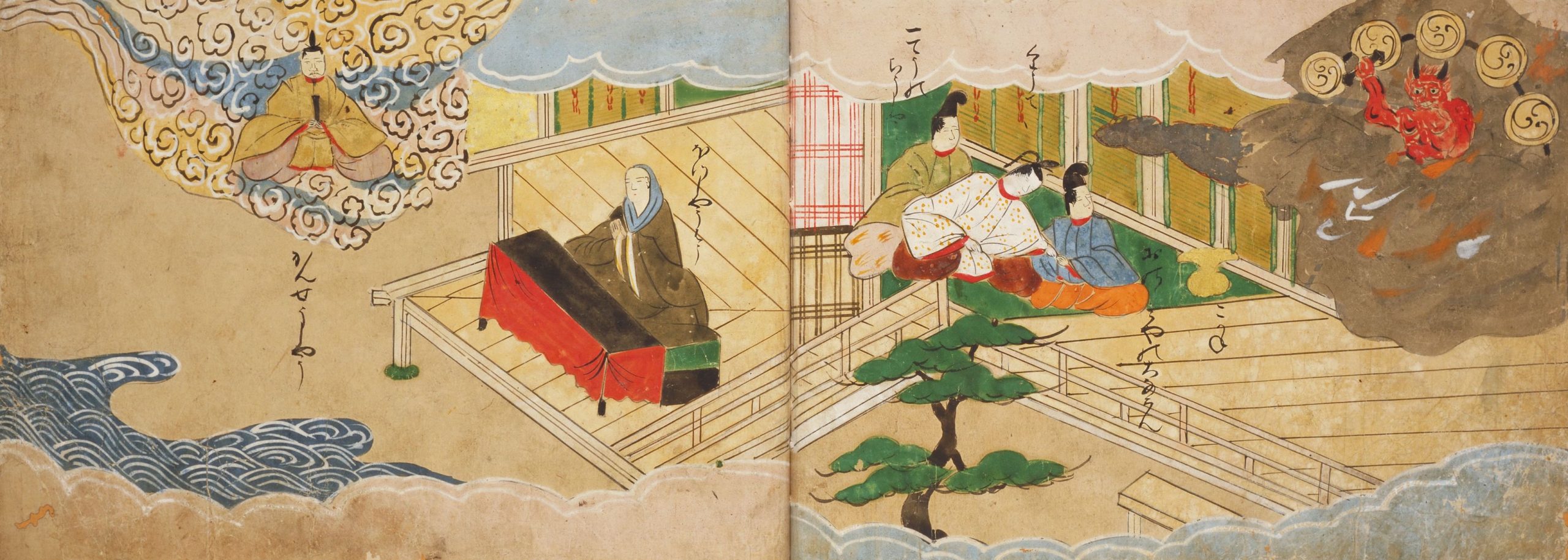
The Story of Sugawara no Michizane,
completed in Muromachi period, transcribed in the 17th century
Sugawara no Michizane (845 – 903) was an unfortunate Japanese scholar and politician. Despite being in the confidence of Emperor Uda (reign: 887 – 897), he became an object of jealousy and was demoted to Dazaifu (in present Fukuoka prefecture). The book on display tells the story of Michizane, who was enshrined as a Japanese god because he became Raijin (the Japanese god of thunder) after his death and caused disasters in Kyoto.
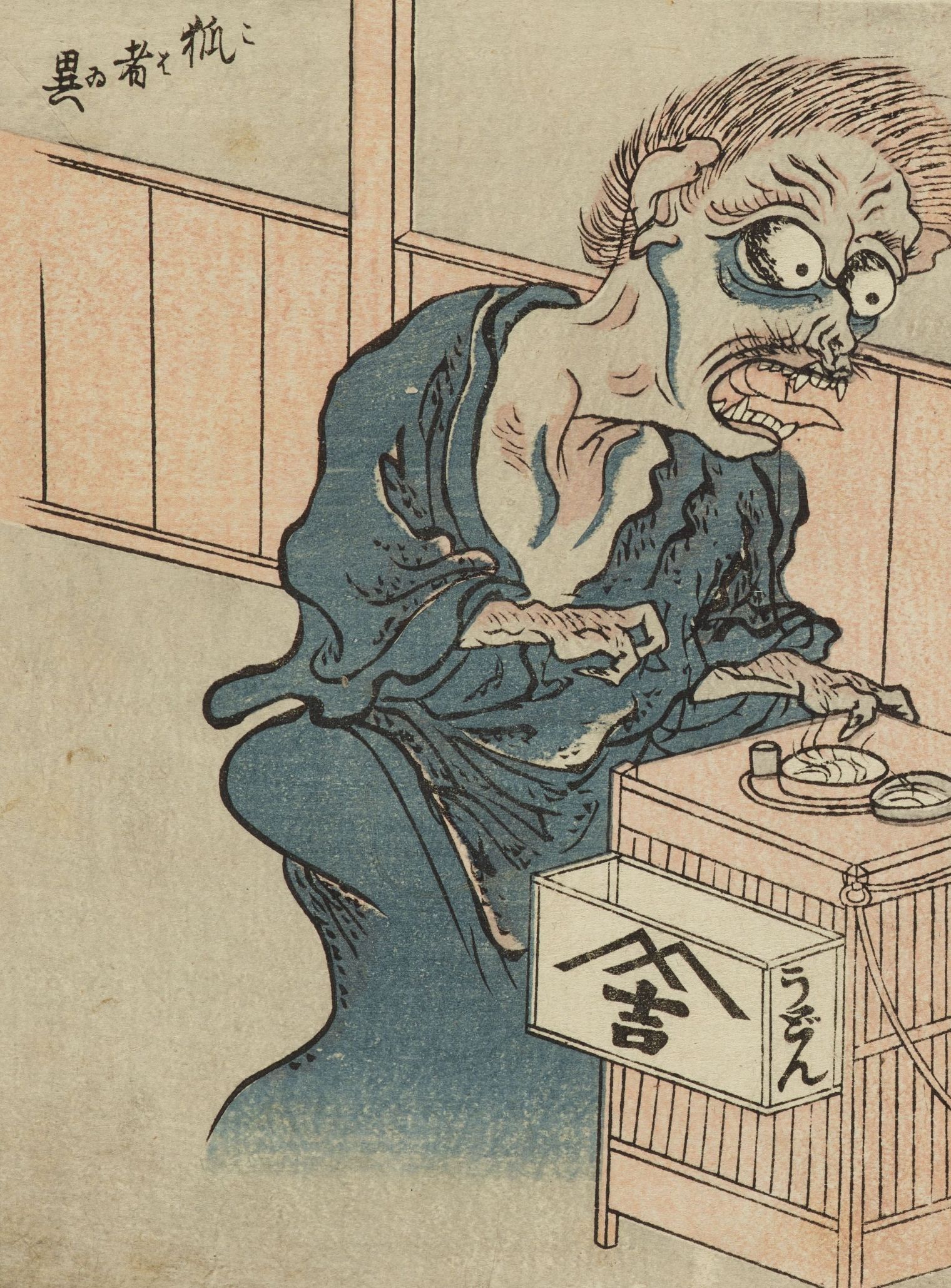
Illustrated Book of One Hundred Ghost Stories,
Compiled by Tousanjin, Illustration by Takehara Shunsen, 1841
This book is a kind of illustrated collection of ghost stories, introducing Japanese monsters. More than 40 varieties of monsters are delicately drawn with humorous expressions. The title One Hundred Ghost Stories also referred to a parlour game that was popular in the Edo period. To play this game people gathered and took turns telling ghost stories until they reached the 100th story. People believed that after telling the 100th story, they would experience a supernatural encounter.
The Supernatural in Asia
Belief in mysterious beings that cause inexplicable phenomena has taken root not only in Japan, but throughout Asia. Legends about “non-human beings” have been collected and recorded by local figures as well as visitors from abroad.
One example is the Feitouman, a supernatural being said to separate its head from its body at night and fly through the air. Known all over Southeast and East Asia, it has a different name in each country: Shichigyo in Vietnam, Luotoumin in China, and Rokurokubi in Japan. Some strange legends were shared across regions in this way, while others, such as Chinese hanging ghosts and the Jinn of Arab traditions, remained unique to particular places.
Please enjoy this look at the wide variety of “non-humans” from across Asia.
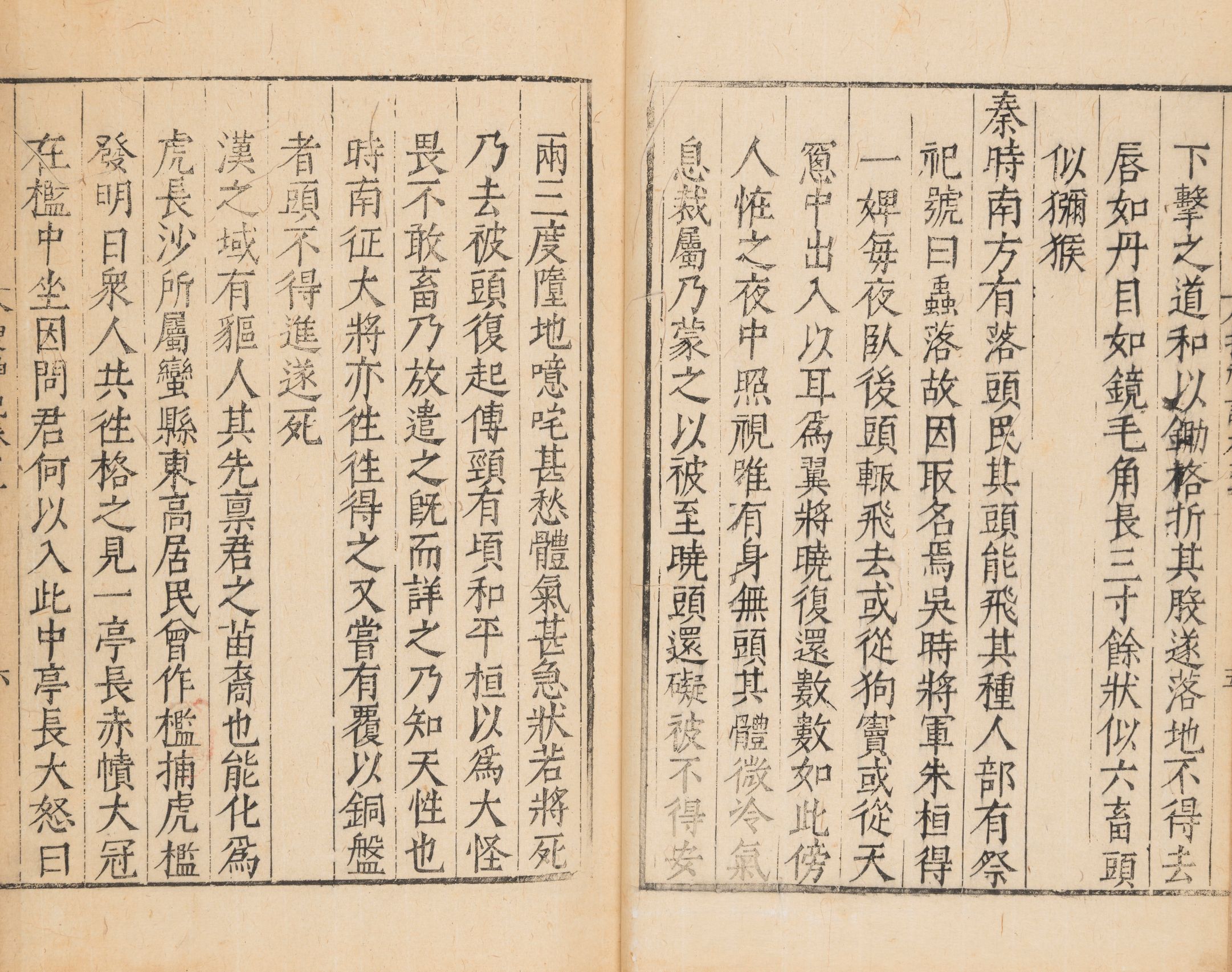
Soushen Ji,
Gan Bao, completed in the 4th century, published during the Wanli era of the Ming dynasty
Soushen Ji is a collection of zhiguai xiaoshuo (tales of the strange and supernatural) compiled by the Eastern Jin scholar Gan Bao (?–336). Recognized for his talent from a young age, Gan Bao served as a historian for the Eastern Jin court after it fled southward during a period of upheaval. Inspired in part by mysterious incidents involving his own relatives, he gathered accounts of strange events and compiled them into this work.
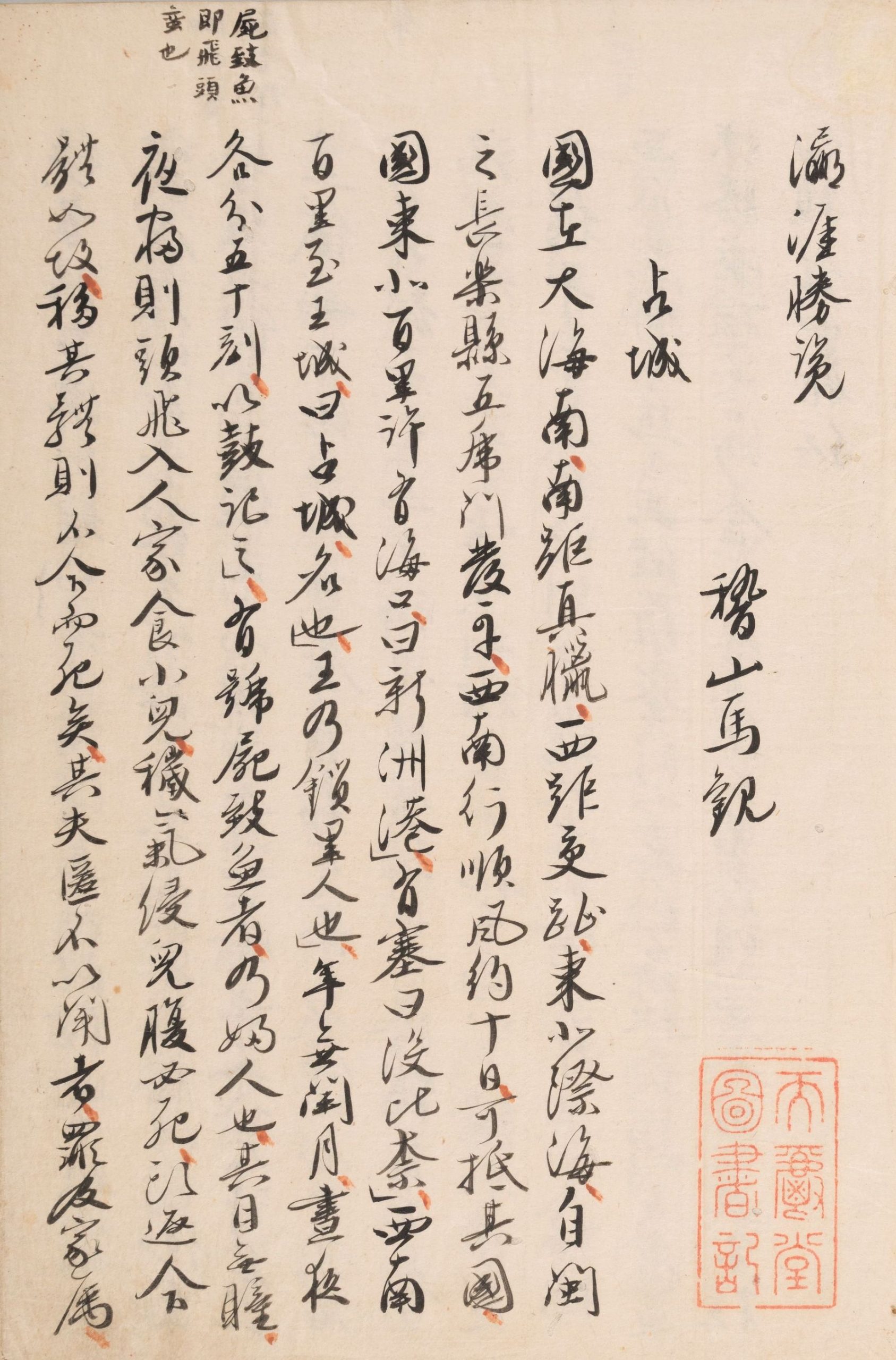
Yingya Shenglan,
selected by Ma Huan, preface dated 1416
This travel account was written by Ma Huan, who accompanied the famous maritime expeditions led by Zheng He during the reign of the Yongle Emperor of the Ming dynasty (r. 1402–24). The text describes a being known as the Hitōban (“Flying-Head Barbarian”) said to inhabit Champa (present-day Vietnam). These creatures were believed to have no pupils in their eyes, and while sleeping, their heads would detach from their bodies and fly off to prey upon children.
Oppression, Judgment, and Conflict: The Horrors Born of Humanity
This section examines the terrors that people have inflicted upon one another. Driven by laws, customs, religious dogma, or simple self-interest, human societies have frequently been the source of immense suffering and strife.
Before the advent of human rights, many forms of punishment focused on direct physical agony, often involving brutal torture. In China and pre-Edo Japan, acts of revenge were similarly sanctioned under Confucian values and even romanticized as virtuous deeds.
While these actions were considered “just” within the context of their time, they appear undeniably horrific to us now. These materials stand as a stark record of the darker side of our shared history.
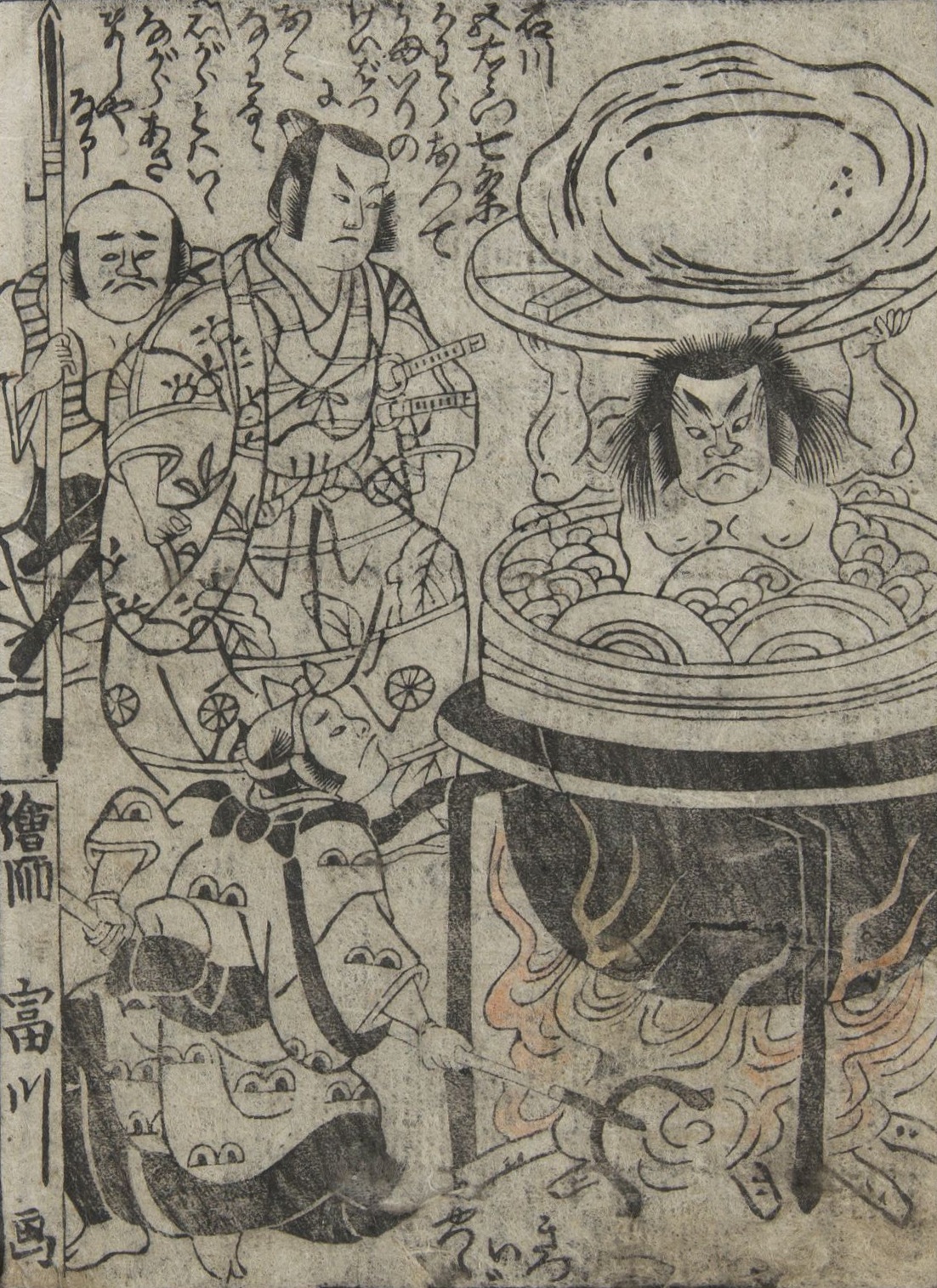
The Tale of Ishikawa Goemon,
Tomikawa Fusanobu, 1776
Ishikawa Goemon is believed to have been a real person who was executed in sixteenth-century Japan as the leader of a band of thieves. Numerous works, including kabuki and jōruri (Japanese ballet drama), feature Ishikawa Goemon and recount various legends about him. One of the most famous episodes is his dramatic death by being boiled alive on a riverbank in Kyoto. This illustrated Edo-period novel depicts this climactic scene.
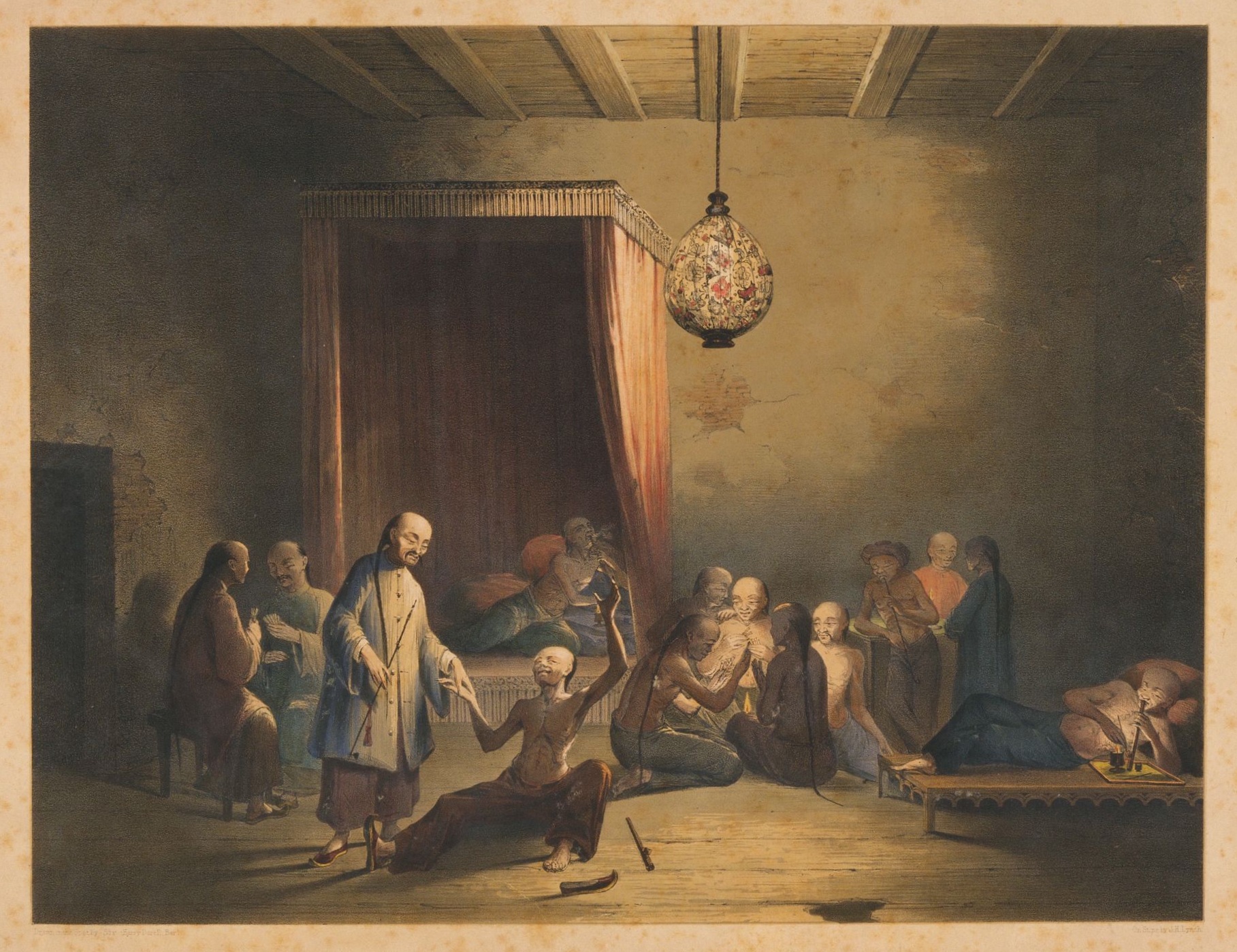
Opium Smokers and Gamblers,
Harry Darrell, 1842
This illustration of a Chinese opium den—a place where opium was sold and smoked—was created by a painter attached to the British navy. The man seated in the foreground with one hand raised appears to have been physically weakened by habitual opium use. Beside him, a man holding a pipe seems to assist customers with smoking opium. Although opium had long been used as a pain-relieving medicine, it is a highly addictive narcotic that gradually destroys both body and mind. In China, addiction spread so widely that even members of the imperial court became dependent on it, though the drug was eventually eradicated in the 1950s at tremendous cost.
The Reality of the Villain
Were history’s “villains” truly evil? And under what conditions is a villain created?
When order is maintained under a central authority, the seeds of opposition often sprout at the fringes of power—among influential relatives or favored retainers. During times of political upheaval and rebellion, certain figures inevitably stand out, and as new powers emerge and solidify their rule, those on the losing side are often branded as the “antagonists.” In many cases, these labels are simply a matter of perspective. At other times, historical figures were exaggerated and cast as villains to serve as moral warnings or cautionary tales for future generations.
This section delves into the “villains” shaped by various points of view and circumstances, uncovering the gap between their popular image and their historical reality.
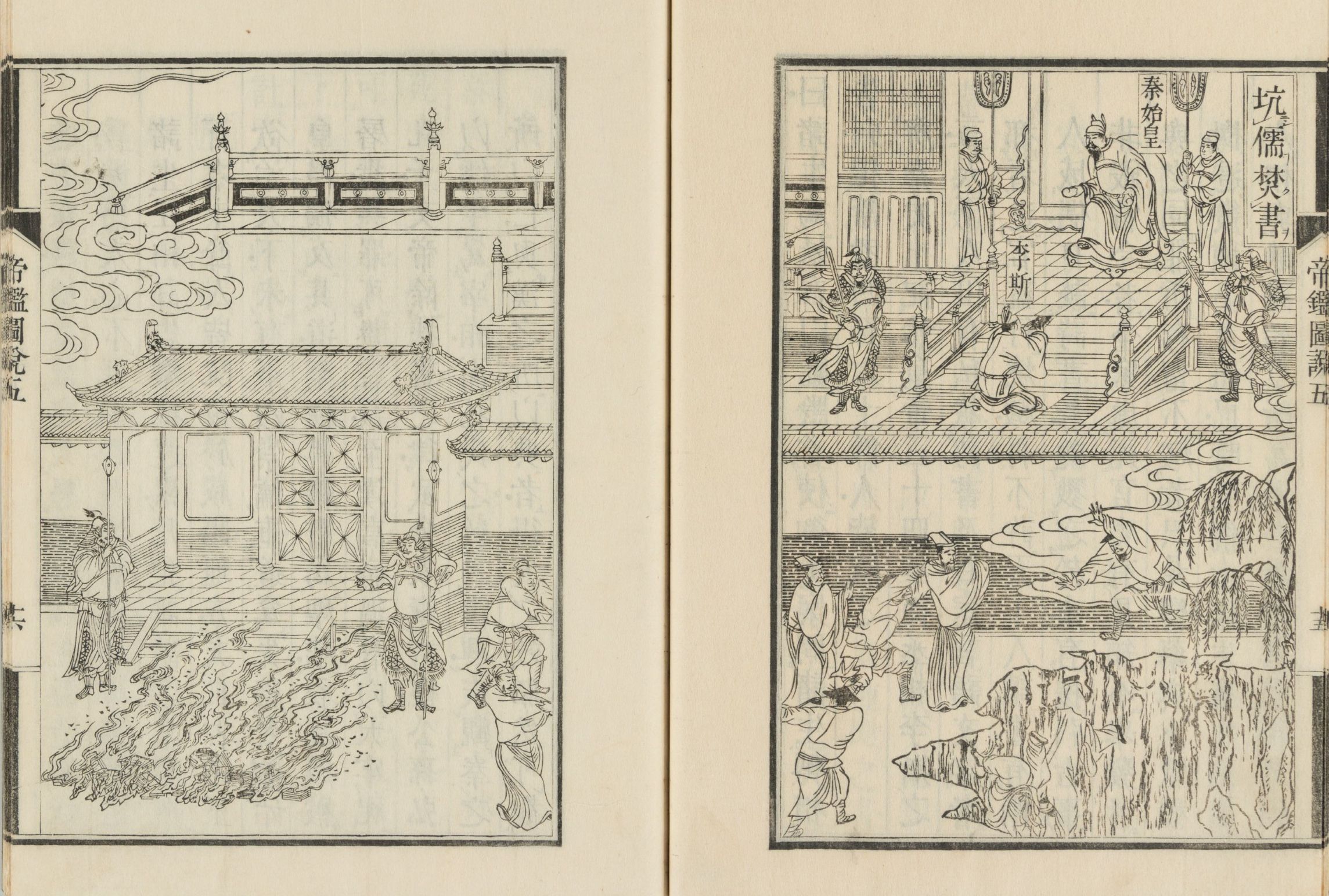
Illustrated Mirror of Imperial Rule,
Zhang Juzheng, compiled in 1572, published in Japan, 1858
The negative image of Qin Shi Huang as a tyrant was shaped largely by later Confucian interpretations. Compiled during the Ming dynasty, this work explains the virtues and failings of successive Chinese rulers from a Confucian perspective. The so-called “burning of books and burying of scholars” is commonly understood as Qin Shi Huang’s suppression of Confucian scholars and is presented here as one of his misdeeds. However, some scholars have suggested that those who were buried alive may actually have been fangshi—practitioners of esoteric arts—rather than Confucian intellectuals.
Facing Disaster and Disease
In the past, when confronted with terrifying events beyond human control like epidemics and natural disasters, people responded by recording the facts, using them as material for creative works, or attributing their causes to the supernatural.
While disasters were sometimes interpreted as divine warnings against bad human conduct. In the Japanese context, they manifested as oni (demons) or yokai (supernatural spirits)—symbols of the “evil” that tormented society, and although these beings were fearsome, they were often shaped by local faith into conceptual or even humorous forms. Such figures served a vital dual purpose: they offered a vessel for the misplaced anger and anxiety of those in distress, while simultaneously acting as talismans to ward off further misfortune.
Presented here are the many forms of “fear” born from the raw realities of human life and survival.
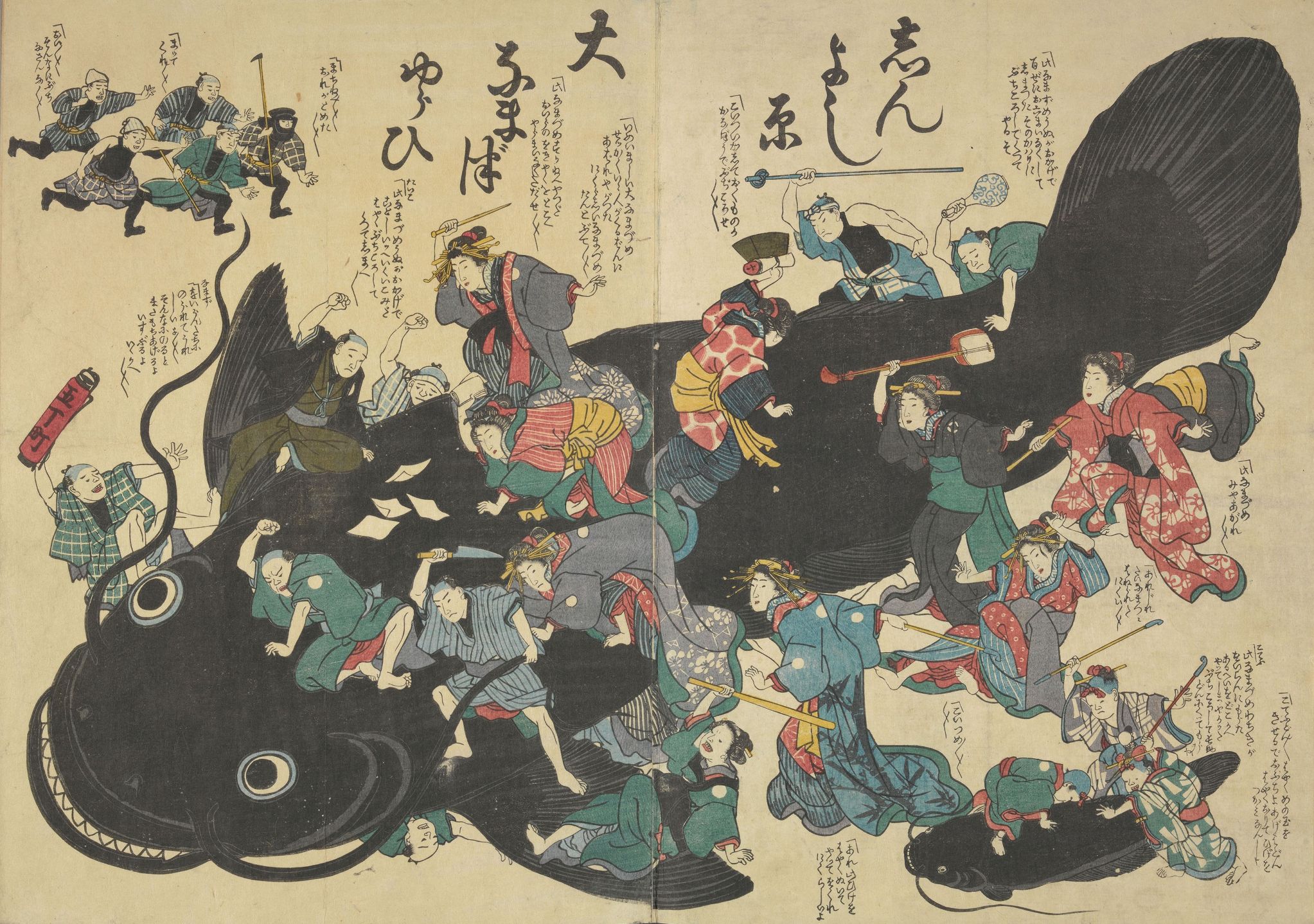
Satirical Earthquake Print (Namazu-e),
1855
The 1854 Tōkai and Nankai earthquakes caused widespread destruction across regions extending from Tōkaidō to Kyushu, Hokuriku, and Shikoku, and in 1855 Edo (present-day Tokyo) was struck by the Great Ansei Earthquake. In the two months following the disaster, numerous ukiyo-e prints known as namazu-e (“catfish pictures”) were produced. These prints depicted giant catfish, which were believed to cause earthquakes, in a wide variety of styles.
Advance Tickets
Museum Calendar
Museum
10:00a.m. - 5:00p.m. (Admission ends 30 minutes before closing time.)
Every Tuesday closed
Tel.03-3942-0280